
Some home upgrades are about convenience. Others are about protection.
Two of the most important safety upgrades for Bay Area homeowners are seismic gas shutoff valves and automatic water shutoff valves. These devices can help reduce the risk of major damage from earthquakes, gas leaks, plumbing leaks, and sudden water line failures.
At Water Heater Boys, we install both types of systems and help homeowners choose the right setup for their home.
Seismic gas shutoff valves
A seismic gas shutoff valve is designed to automatically stop the flow of natural gas to your home when it detects strong ground movement.
In the Bay Area, where earthquakes are a real risk, this can be an important layer of protection. If a gas line is damaged during an earthquake, an automatic shutoff valve can help reduce the risk of fire, explosion, or gas-related hazards.
These valves are typically installed near the gas meter on the home’s main gas line. Once installed, the valve must be properly mounted, positioned, and tested so it functions as intended.
Little Firefighter seismic gas shutoff valve
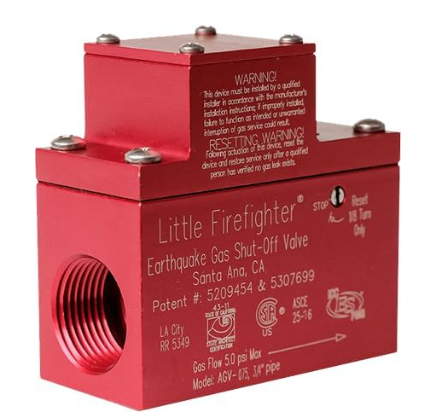
The Little Firefighter seismic gas shutoff valve is one of the most common options for Bay Area homeowners.
It is designed to shut off natural gas automatically during a significant seismic event. This can be especially helpful if nobody is home when an earthquake happens, or if the homeowner is unable to reach the gas meter safely afterward.
After installation, Water Heater Boys can provide a Certificate of Installation, which may be useful if your insurance company requests proof that the valve was installed.
Automatic Water Shutoff Valves
Water damage is one of the most common and expensive problems homeowners face. A failed supply line, leaking pipe, running toilet, water heater leak, or burst fitting can cause major damage if it is not caught quickly.
An automatic water shutoff valve helps protect the home by monitoring water usage and shutting off the water when a serious leak or unusual flow pattern is detected.
These systems are installed on the home’s main water line and can help limit damage before a small leak turns into a major insurance claim.
Moen Flo automatic water shutoff valve
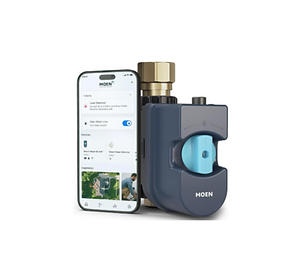
The Moen Flo is a smart water shutoff device that monitors the plumbing system and can automatically shut off water to the home if it detects a possible leak.
It also connects to the Moen app, allowing homeowners to monitor water usage, receive alerts, and shut off the water remotely.
Moen Flo valves come in different sizes, so the right model depends on the size and configuration of your main water line. During the estimate process, we can help confirm which valve is appropriate for your home.
Why homeowners install these safety devices
Many homeowners install seismic gas shutoff valves and automatic water shutoff valves because their insurance company recommends or requires them.
Others install them simply because they want better protection.
These devices can help:
Reduce the risk of gas-related hazards after an earthquake
Limit water damage from leaks or failed plumbing components
Provide documentation for insurance requests
Add a modern safety upgrade to the home
Give homeowners more control and peace of mind
For many homes, these are relatively small upgrades compared to the cost of repairing fire, gas, mold, flooring, drywall, or structural damage after a major incident.
Choosing the right device
The right safety device depends on your home’s setup.
For a seismic gas shutoff valve, the gas meter location, pipe size, available mounting area, and local requirements all matter.
For a Moen Flo or similar automatic water shutoff valve, the main water line size, pipe material, installation location, Wi-Fi availability, and access for future service all need to be considered.
Water Heater Boys can review your setup and recommend the appropriate device for your home.
Our installation process
The process usually starts with photos.
For a seismic gas shutoff valve, we typically need clear pictures of your gas meter, the surrounding piping, and the area where the gas line enters the home.
For an automatic water shutoff valve, we need pictures of the main water line, the shutoff area, and the pipe entering the home.
From there, we can help identify the right device, confirm installation requirements, and provide a clear estimate.
Most installations can be completed in a single visit, depending on the home’s setup.
Insurance documentation
If your insurance company has requested proof of installation, Water Heater Boys can provide documentation after the work is completed.
For seismic gas shutoff valves, this may include a Certificate of Installation. For automatic water shutoff valves, we can provide documentation showing the device installed and the work completed.
Insurance requirements vary, so homeowners should confirm exactly what their carrier needs before installation.
Water Heater Boys can help
Water Heater Boys installs seismic gas shutoff valves and Moen Flo automatic water shutoff valves throughout the Bay Area.
We can help size the right device, source the equipment, install it properly, test the system, and provide documentation when needed.
Call Water Heater Boys at (925) 208-4626 to request an estimate for a seismic gas shutoff valve, automatic water shutoff valve, or both.
Is California Banning Gas Water Heaters?
Yes, but the timeline depends on the type of water heater you have. In the Bay Area, new rules are phasing out gas water heaters based on BTU rating.
Starting January 1, 2027, new gas water heaters under 75,000 BTU can no longer be sold or installed. This mainly affects traditional 40 and 50 gallon tank water heaters.
Starting January 1, 2031, the rule expands to larger water heaters over 75,000 BTU. You can continue using and repairing your current unit, but the rule applies when it fails and needs to be replaced after these deadlines. The long term direction is clear. New systems are moving toward electric.
What Changes for Homeowners
Right now, replacing a gas tank water heater is still a simple job in most homes. Once you are pushed into electric, especially heat pump water heaters, the job often becomes more complex. Not because of the unit itself, but because of what your home may need to support it.
Why Waiting Can Get Expensive
If your water heater fails after these changes take effect, you may not have the option to install another gas tank. Most homeowners will be pushed toward a heat pump water heater. Heat pump water heaters typically require a dedicated 240V electrical circuit. If your home does not already have that available, you are now adding electrical work before installation can even begin. That can include running a new 240V circuit, adding breaker capacity, or upgrading the electrical panel. The water heater itself is only part of the cost. The electrical side is what creates variability.
CALL NOW 650-844-2305
Real Cost Comparison
This is the part most homeowners are not seeing yet. Replacing a standard 40 to 50 gallon gas tank today is typically under $2,000 installed and is usually a straightforward swap with no electrical work. Converting to a heat pump water heater is typically $5,000 to $6,000 installed even without a panel upgrade, due to additional labor, electrical work, and setup requirements. If electrical upgrades are needed, panel work can add several thousand dollars and push the total project well beyond that range.
What About Switching to a Gas Tankless System?
Some homeowners look at these changes and think a gas tankless water heater is a way to extend how long they can stay on gas. Tankless systems fall under the later phase of the regulations, with restrictions starting in 2031. But they are still gas appliances and do not meet zero emission requirements, which means they are on the same path toward being phased out. In practical terms, you install a tankless system today, you get one life cycle out of it, and when it eventually fails, replacement options will likely be electric only.
Instead of avoiding the transition, you are postponing it.
In many cases, installing tankless is not a simple swap either. It can require gas line upgrades, venting changes, and higher upfront cost than a standard tank. So you may spend more now and still face the same conversion later.
What to Expect With Hybrid Systems
Heat pump water heaters are the primary replacement being pushed as gas is phased out. They are efficient and meet zero emission requirements, but they come with different installation needs. They require sufficient electrical capacity, need space and airflow, are larger than standard tanks, and require condensate drainage. In many homes, the limiting factor is not the water heater. It is the electrical system.
The Real Risk Is Timing
Most water heaters are replaced when they fail. That works today because replacements are simple. After these changes, that same failure can force a much larger project. You may need electrical upgrades immediately, you may be waiting on electricians or permits, and you may be without hot water longer than expected. What used to be a one-day replacement can turn into a multi-step job.
What This Means for You
If your water heater is newer, you may not need to act right now. But if it is older or nearing the end of its life, this is the window where you still control the outcome. Replacing it now means keeping the install simple, avoiding electrical upgrades, and avoiding higher and less predictable costs. Waiting means the decision may be made for you.
Plan Before It Becomes an Emergency
If you want a clear picture of where you stand, we can take a look and show you the age and condition of your system, the likelihood of failure, and what replacement looks like now versus later. That way you can make a decision on your terms instead of reacting to an emergency. Call us today or use the button below to request a visit.
Tankless water heaters are popular because they save space, provide continuous hot water, and can be more efficient than a traditional tank water heater.
But tankless pricing can vary a lot from home to home. The cost is not just the unit itself. The final price depends on gas line sizing, venting, location, condensate drainage, code upgrades, recirculation needs, and how much work is required to install the system properly.
If you are comparing tankless water heater estimates, here are the biggest things that affect the price.
The size of the tankless water heater
Tankless water heaters are sized based on hot water demand, not just the number of people in the home.
The right unit depends on how many bathrooms you have, how many fixtures may run at the same time, the incoming water temperature, and how much hot water your household uses.
A larger unit usually costs more, but undersizing the system can lead to poor performance. The goal is to choose a unit that matches the home without overspending on unnecessary capacity.
Gas line requirements
Gas line sizing is one of the biggest factors in tankless installation pricing.
A standard gas tank water heater often uses far less gas than a whole-home tankless water heater. Many tankless units are 150,000 to 199,000 BTU/hr, which means the existing gas line may not be large enough.
In many homes, the installer needs to run a new dedicated gas line from the meter to the tankless unit. This may be 3/4 inch or larger depending on the distance, BTU load, meter capacity, and other gas appliances in the home.
A lower estimate may not include proper gas sizing. That can lead to performance problems, error codes, or an installation that does not meet code.
Venting requirements
Tankless water heaters have specific venting requirements, and the venting setup can significantly affect the installation cost.
Many modern tankless units use a direct-vent setup, meaning the unit brings combustion air from outside and also exhausts to the outside. This usually requires proper intake and exhaust piping.
Venting through the garage or relying on indoor air is not always acceptable and may not meet manufacturer requirements. Proper venting is critical for safety, performance, and warranty protection.
The cost depends on where the tankless unit is installed, how far the venting has to run, what wall or roof penetrations are needed, and whether the existing venting can be reused. In many cases, it cannot.
Installation location
Where the tankless water heater is installed matters.
Installing the new unit close to the existing water heater location may reduce plumbing, venting, gas, and electrical work. Moving the unit to a new wall, exterior location, attic, crawlspace, or different part of the garage can increase cost.
A good location should allow proper venting, service access, gas line routing, water line connections, condensate drainage, and future maintenance.
The cheapest location is not always the best location. The unit still needs to be accessible and installed according to manufacturer requirements.
Condensate drainage and neutralizer kit
High-efficiency gas tankless water heaters produce condensate. This condensate is acidic and needs to be drained properly.
In many installations, a condensate neutralizer kit should be installed. The neutralizer contains media that helps reduce the acidity before the condensate drains into the plumbing system or approved drain location.
Skipping the neutralizer or draining acidic condensate to the wrong place can damage pipes, concrete, or nearby surfaces over time.
This is one of those details that may not be obvious in a low estimate, but it matters for a correct installation.
Electrical requirements
Gas tankless water heaters still need electricity.
The unit needs power for the control board, ignition system, fan, and safety controls. In some homes, this may be simple. In others, a new outlet, dedicated circuit, or electrical correction may be needed.
If the tankless system includes recirculation controls, smart features, or additional components, the electrical setup may also need to be reviewed.
Recirculation and hot water wait time
Tankless water heaters do not automatically make hot water arrive instantly at every faucet.
If the far bathroom is a long distance from the water heater, there may still be a wait for hot water unless the home has a dedicated recirculation line or another recirculation solution.
Some tankless units have built-in recirculation pumps, but the plumbing layout still matters. Homes without a dedicated return line may need a crossover-style solution, and even then, the result may be faster hot water, not truly instant hot water.
Recirculation options can affect the total installation cost, so they should be discussed upfront.
Code upgrades and safety items
A proper tankless installation may require more than simply hanging the unit on the wall.
The estimate should account for items like gas shut-off valves, sediment traps, water isolation valves, flush service valves, proper vent terminations, condensate handling, pressure relief piping, seismic considerations, electrical requirements, and manufacturer clearances.
These details are important for safety, maintenance, warranty protection, and long-term reliability.
Brand and model selection
The brand and model also affect price.
At Water Heater Boys, Navien is our preferred brand for tankless water heaters. Navien units are popular because they are efficient, reliable, and offer strong options for residential tankless systems, including models with built-in recirculation features.
The best model depends on the home’s layout, hot water demand, gas availability, and whether recirculation is needed.
Why some tankless estimates are much lower
If one estimate is much lower than the others, it is worth asking what is included and what is being left out.
A low tankless estimate may skip or underprice important items such as a dedicated gas line, proper intake and exhaust venting, condensate neutralizer, isolation valves, service valves, electrical work, recirculation planning, permits, or code corrections.
That does not mean the highest estimate is always the best. But with tankless water heaters, a very low price can sometimes mean the installer is planning a shortcut that may cost more later.
What to look for in a tankless water heater estimate
A good estimate should clearly explain what unit is being installed, whether a new gas line is needed, how the unit will be vented, where the condensate will drain, whether a neutralizer is included, what electrical work is required, whether recirculation is included, and what code upgrades are part of the job.
It should also explain what is not included, such as permit fees, major electrical panel work, drywall repair, or unexpected conditions hidden inside walls or ceilings.
Clear pricing upfront helps avoid surprises later.
Is tankless worth it?
Tankless water heaters can be a great choice for the right home.
They save space, provide continuous hot water, and can be efficient when installed correctly. They can also be a good option for homeowners who want to avoid storing 40 to 75 gallons of hot water in a tank.
But tankless is not the best fit for every home. Installation cost, gas line requirements, venting, maintenance, recirculation needs, and future Bay Area gas appliance rules should all be considered before making the switch.
Bay Area tankless water heater rules
Another factor to consider is the Bay Area gas appliance phase-out.
Under the current Bay Area timeline, many high-BTU gas tankless water heaters are expected to be affected in 2031. This is different from standard residential gas tank water heaters under 75,000 BTU/hr, which are currently tied to the earlier 2027 deadline.
That means a tankless water heater may still be an option today, but homeowners should understand the long-term timeline before investing in a new gas system. If you plan to stay in the home long term, it is worth comparing tankless against hybrid heat pump water heater options before making a final decision.
Water Heater Boys can help
Water Heater Boys installs tankless water heaters throughout the Bay Area.
We offer free site visits and can usually inspect your setup quickly. During the visit, we look at your current water heater, gas line, venting options, installation location, drainage, electrical access, and hot water needs.
From there, we can provide a clear estimate and explain whether tankless makes sense for your home, or whether a gas tank, electric, or hybrid heat pump water heater may be a better option.
Call Water Heater Boys at (925) 208-4626 to schedule a tankless water heater estimate.
Most homeowners do not think much about their toilet until something goes wrong. A slow leak, constant clogging, wobbling at the base, or cracks in the porcelain are often the first signs that replacement is overdue.
Even when a toilet still works, an older model can waste water, flush poorly, clog more often, and create ongoing maintenance headaches.
If your toilet is more than 10 years old, replacing it can improve daily comfort, reduce water waste, and help prevent unexpected repairs.
Common signs it is time to replace your toilet
Toilet problems often start small but get worse over time.
A constantly running toilet can waste a surprising amount of water. Frequent clogs may mean the toilet no longer flushes efficiently. A toilet that rocks at the base may have a failing wax ring, loose mounting hardware, flange issues, or flooring movement.
Cracks in the tank or bowl are another warning sign. Even a hairline crack can eventually turn into a leak that damages flooring, subflooring, drywall, or nearby cabinetry.
It may be time to replace your toilet if it:
Clogs frequently
Runs constantly
Requires multiple flushes
Rocks or moves at the base
Has visible cracks in the tank or bowl
Leaks around the base
Uses more water than modern models
Looks outdated or no longer fits the bathroom
Replacing a toilet before a major failure can help you avoid water damage, emergency service calls, and the inconvenience of having a bathroom out of service.
Why newer toilets are better
Modern toilets are designed to flush more effectively while using less water.
A good modern toilet can provide stronger flush performance, fewer clogs, quieter operation, and a cleaner overall look. Many newer models also have smoother bowl surfaces and improved internal components compared to older toilets.
Most homeowners notice the difference right away. A toilet upgrade is not just cosmetic. It can improve the way the bathroom functions every day.
Comfort height and extra tall toilet options
One of the best reasons to replace an older toilet is comfort.
Many older toilets are lower than what homeowners prefer today. A comfort height or extra tall toilet can make it easier to sit down and stand up, especially for older adults, people with knee or hip issues, people recovering from surgery, and anyone with mobility limitations.
This can be especially important for elderly family members or people with disabilities. A taller toilet can reduce strain, improve stability, and make the bathroom safer and easier to use.
For some homes, an extra tall toilet is a simple upgrade that makes a major difference in daily comfort and accessibility. It can also be a smart improvement for aging-in-place planning.
Adding a bidet: comfort, hygiene, and accessibility
Many homeowners are choosing to pair a toilet replacement with a bidet or bidet seat.
A bidet can provide a higher level of cleanliness and comfort compared to toilet paper alone. It can also be helpful for people with mobility challenges, sensitive skin, medical issues, or anyone who wants a cleaner and more comfortable bathroom experience.
There are several bidet options to consider:
Bidet seats that replace the existing toilet seat and may include features like warm water, adjustable spray settings, heated seats, and air drying.
Bidet attachments that are more basic and affordable.
Standalone bidets for larger bathroom remodels.
For elderly homeowners or people with disabilities, a bidet seat can be more than a luxury. It can make bathroom use easier, cleaner, and more independent.
Why let Water Heater Boys supply the toilet and bidet?
We recommend having Water Heater Boys supply the toilet and optional bidet for your installation.
When we source the fixture, we can help make sure the toilet is the right fit for your bathroom, your plumbing, and your comfort needs. That includes checking the rough-in size, toilet height, bowl shape, water connection, bidet compatibility, and installation requirements.
It also helps avoid the common problems that happen when homeowners buy the wrong toilet online or from a retail store.
When we supply the toilet, we choose products we know perform well and install reliably. We focus on dependable models with good flush performance, strong parts availability, and fewer long-term issues.
If there is a manufacturer defect with a toilet or bidet we supply, we can help manage the warranty process. If the homeowner supplies the fixture, they are usually responsible for handling returns, exchanges, missing parts, or manufacturer claims directly.
One simple process from start to finish
When you choose Water Heater Boys, we make the process simple.
We help you select the right toilet and optional bidet for your home and budget. We deliver the fixture, remove and dispose of the old toilet, install the new toilet, replace the necessary seals and supply connection, test for leaks, and confirm proper operation.
You do not need to haul a heavy box, coordinate delivery, guess which model fits, or deal with returns if something arrives damaged or incomplete.
We handle the installation from start to finish.
Better value over time
A properly selected and professionally installed toilet can reduce the risk of leaks, clogs, unstable mounting, and early part failures.
A bidet can also reduce toilet paper use, improve comfort, and make the bathroom more functional for the whole household.
For many homeowners, a toilet replacement is one of the simplest ways to improve a bathroom without doing a full remodel.
When replacement makes the most sense
Toilet replacement makes sense if your toilet is original to the home, frequently clogs, runs constantly, rocks at the base, has visible cracks, leaks, or no longer meets your comfort needs.
It also makes sense if you want to upgrade to a comfort height or extra tall toilet for better accessibility.
Adding a bidet is a smart upgrade if you want better hygiene, reduced toilet paper use, improved comfort, or a more accessible bathroom setup.
Water Heater Boys can help
Water Heater Boys installs toilets, comfort height toilets, extra tall toilets, and bidet seats throughout the Bay Area.
We can help you choose the right model, confirm fit, supply the fixture, remove the old toilet, and complete the installation properly.
Call Water Heater Boys at (650) 844-2305 to request an estimate for toilet replacement or a toilet and bidet upgrade.
Replacing a water heater can feel overwhelming, especially when you are not sure what it should cost or who to trust. Our goal is to help you understand what goes into pricing so you can make confident, informed decisions.
Whether your current unit is leaking, running out of hot water, or simply reaching the end of its life, knowing what to expect will help you avoid stress and unexpected expenses. Below, we break down the main factors that affect water heater replacement costs and how to get the best value for your home.
What Influences Water Heater Replacement Costs?
Several factors determine how much you will pay for a new water heater. Understanding these helps you budget accurately and avoid surprises.
Type of Water Heater
Tank or tankless. Gas or electric. Tankless and heat pump systems cost more upfront but offer long term energy savings. Traditional tank heaters are more affordable initially and remain the most common choice, although they will be banned from installation in the Bay Area Jan 1, 2027. Gas tankless systems will be banned in the Bay Area Jan 1, 2031.
Size and Capacity
Larger households require larger tanks or higher capacity tankless units. Choosing the right size is critical for performance and cost control.
Installation Complexity
Some upgrades require more than simply swapping out the old unit. For example, tankless systems often need a new or upgraded gas line and additional electrical connections at the heater location. Hybrid heat pump water heaters usually require a dedicated electrical circuit and, in some homes, a panel upgrade. Both systems also produce condensate and typically require a drain line and neutralizer kit. These added requirements can increase installation time and cost.
Considering these factors helps you choose the right system and avoid underestimating your investment.
Main Types of Water Heaters for the Bay Area
Typical Water Heater Replacement Costs in the Bay Area
Below are general price ranges including equipment and professional installation.
Standard Gas Tank Water Heater: $1,700 to $3,000+
Usually, 40 to 75 gallons. Most straightforward replacements fall in this range.
High Efficiency Hybrid Electric Water Heater: $4,000 to $7,000+
These models offer major energy savings and may qualify for rebates but often require electrical upgrades.
Tankless Gas Water Heater: $3,500 to $6000+
Highly efficient systems that heat water on demand. Conversions often require new gas lines or venting, and sometimes electrical work.
These price ranges include the equipment, professional installation, removal and disposal of old unit, and required safety upgrades. Final cost depends on your home’s layout, code requirements, and whether upgrades to gas or electrical lines are needed.
Why Reviews Matter When Choosing a Plumber
One of the best ways to evaluate a plumbing company is through real customer feedback. We maintain a 5-star average across Google, Yelp, Angi, and Thumbtack.
Homeowners consistently mention our fast response times, clear communication, and thorough explanations. We take the time to answer questions thoughtfully and prepare you for exactly what to expect before work begins. Our goal is not just to install a water heater, but to make sure you feel informed and confident throughout the entire process.
Our reviews reflect consistent quality workmanship, transparent pricing, and customer service that puts homeowners first.
We are ready to answer questions and provide free estimates 7-Days a week. Call us now, we look forward to helping you with your water heater needs.