When a sewer line backs up, most homeowners assume it is a simple clog. Sometimes it is. But when backups repeat, the issue is usually structural — and no amount of snaking will fix it permanently.
Understanding what can go wrong underground helps you make better decisions and avoid spending thousands on temporary fixes.
Common Causes of Sewer Line Failure
Most homes in the East Bay have sewer laterals made of clay, cast iron, or ABS. Over time, several things can happen:
Root Intrusion: Tree roots are naturally drawn to moisture. Even a small joint separation allows roots to enter the pipe and grow into a dense blockage over time.
Separated or Offset Joints: Soil movement, settlement, or aging materials can cause joints to shift. When the pipe separates, debris catches and backups occur regularly.
Cracked or Collapsed Pipe: Older clay and cast-iron lines can crack or deteriorate. In more severe cases, sections can partially or fully collapse.
Bellies or Low Spots: If part of the line has settled, wastewater can collect instead of flowing smoothly downhill. This creates recurring slow drains and backups.
Why Snaking Is Not Always the Solution
Drain snaking cuts through obstructions. It is effective for grease, wipes, and minor root intrusion. However, if the pipe itself is broken, offset, or has collapsed, snaking clears the symptom without addressing the cause. The backup returns — sometimes within days.
What a Proper Sewer Diagnosis Looks Like
A thorough approach includes:
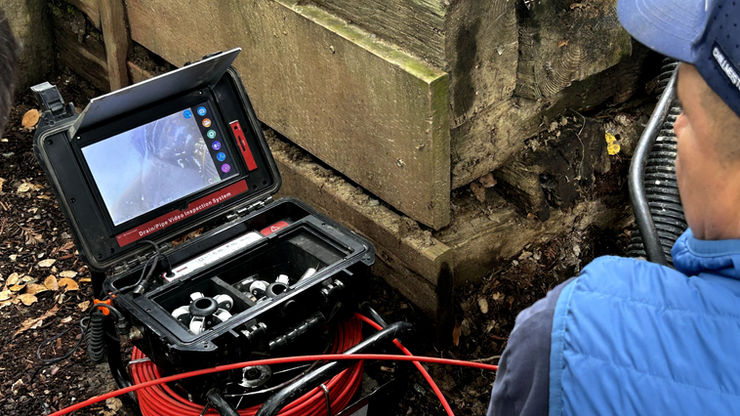
- Full video camera inspection of the sewer lateral
- Identification of depth and exact distance to the failure
- Clear explanation of what is happening inside the pipe
- Before and after camera confirmation
Without seeing the inside of the line, you are making decisions blindly.
A Real Example from a Recent East Bay Project
We were recently contacted by a homeowner who had just purchased a property in Oakland and immediately experienced sewer backups. The previous owner had the line snaked multiple times over the years — each time buying a few months of relief.
We performed a full camera inspection and located the real issue over 50 feet from the cleanout. The pipe had separated at a joint, and roots had grown into the gap over years. Each prior service had only trimmed the roots temporarily. The broken section remained.
We excavated only the damaged portion of pipe, replaced that section properly, and re-ran the camera to confirm the line was clear and structurally sound. The backups stopped because the underlying structural failure was corrected.
Why Targeted Repair Matters
Many homeowners fear sewer repair because they imagine their entire yard being torn up. In reality, modern diagnostic tools allow us to pinpoint the exact location of a failure. When the damaged section is accurately identified, only that portion needs to be replaced — less disruption to landscaping, and a permanent resolution.
When to Consider a Sewer Inspection
You should strongly consider a camera inspection if:
- You have had the line snaked more than once in the past two years
- Multiple drains in the home are slow simultaneously
- You notice gurgling sounds from toilets or drains
- You are buying a home built before 1980
- There are large trees near your sewer line
Water Heater Boys provides sewer line camera inspections and targeted repairs throughout the Bay Area. Call us at (415) 888-4428 to schedule an assessment.