A heat pump water heater can be a great option for the right home. These systems are highly energy efficient and are becoming more common as homeowners consider electrification and changing Bay Area water heater rules.
But a heat pump water heater is not automatically the best choice for every house.
The right decision depends on where your water heater is located, your electrical setup, available space, household hot water demand, noise considerations and installation cost.
What Is a Heat Pump Water Heater?
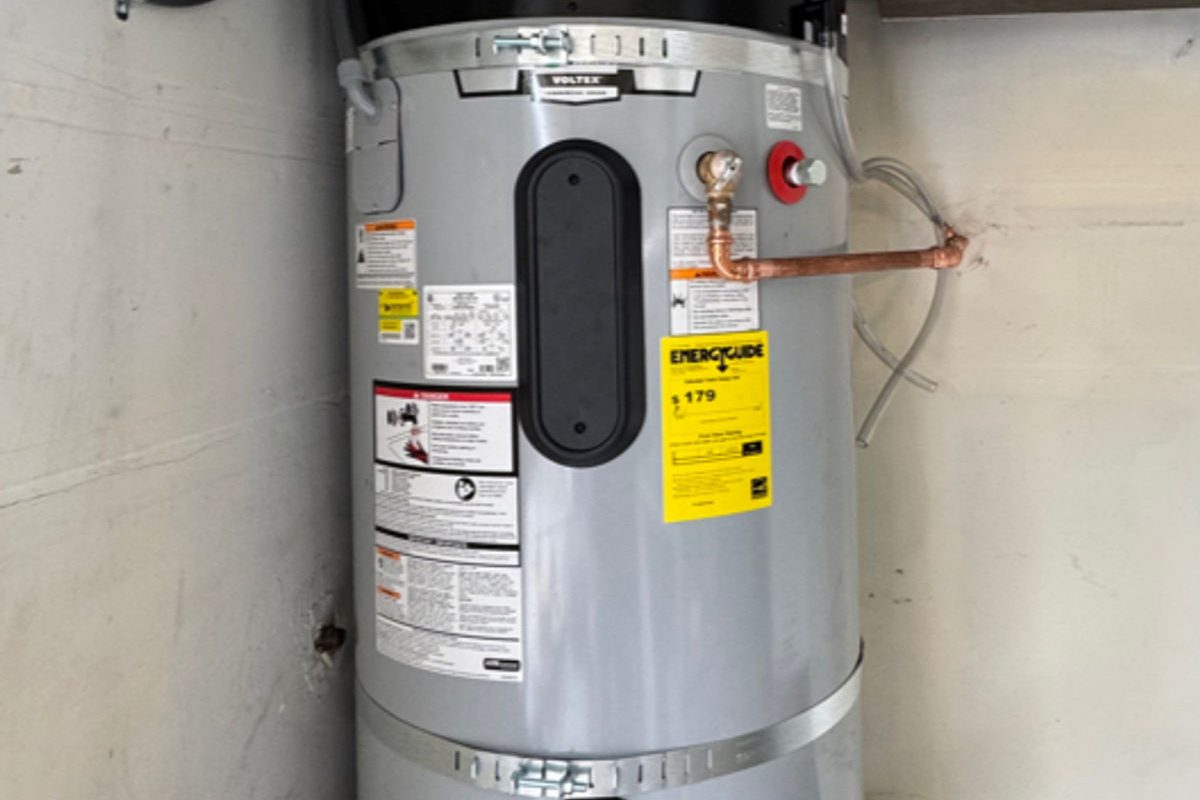
A heat pump water heater, sometimes called a hybrid electric water heater, is an electric tank water heater that uses heat pump technology to heat the water.
Instead of creating all of its heat with electric resistance elements, the heat pump pulls heat from the surrounding air and transfers it into the water.
Many hybrid models also contain electric resistance heating elements that can provide additional heating when needed, such as during periods of high hot water demand.
Because moving heat requires much less energy than creating it directly with electric resistance, heat pump water heaters can be significantly more energy efficient than conventional electric tank water heaters.
Why Are Bay Area Homeowners Considering Heat Pump Water Heaters?
There are several reasons.
Heat pump water heaters can substantially reduce the amount of electricity required for water heating compared with standard electric resistance water heaters. They can also eliminate the need for natural gas at the water heater.
For homes with the right installation conditions, particularly water heaters located in garages or other suitable spaces, they can be an attractive replacement for a traditional gas tank water heater.
They are also receiving more attention because Bay Area regulations are moving toward zero-NOx water heating equipment.
Those regulations are still being revised, so homeowners should check the current requirements when replacement becomes necessary rather than assuming a particular deadline or replacement option applies to every home.
Benefits of a Heat Pump Water Heater
High Energy Efficiency
Energy efficiency is the biggest advantage of a heat pump water heater.
Rather than generating all of its heat directly from electricity, the unit transfers existing heat from the surrounding air into the water.
That can significantly reduce energy consumption compared with a conventional electric resistance water heater.
Actual operating costs depend on utility rates, household usage, operating mode and other factors, so efficiency does not automatically translate into the same dollar savings for every household.
Can Be a Good Match for Homes With Solar
A heat pump water heater can be especially attractive for homeowners who already generate electricity with rooftop solar and want to reduce their use of natural gas.
The financial benefit depends on the home’s solar production, utility rate plan, electricity usage and how the solar system is compensated for electricity sent back to the grid.
Solar alone does not automatically make a heat pump water heater the best option, but it is one factor worth considering.
Helps Prepare the Home for Electrification
Homeowners who are already planning to move away from natural gas may prefer to replace an aging gas water heater with a heat pump model rather than install another gas appliance.
This can also reduce the number of gas appliances in the home as Bay Area regulations continue to evolve.
That does not mean a working gas water heater needs to be replaced early. Planning ahead simply gives homeowners more time to understand their options before an emergency occurs.
Rebates May Be Available
Heat pump water heater incentives may be available through state, regional, utility or Community Choice Aggregator programs.
Programs and funding change frequently, and eligibility may depend on the equipment, utility provider, household income, contractor and installation requirements.
Before making a purchasing decision based on a rebate, confirm that the program is still available and that the project qualifies.
Drawbacks of a Heat Pump Water Heater
Higher Upfront Cost
A heat pump water heater generally costs more than a basic tank water heater.
The installation can also become more expensive when converting an existing gas water heater because the project may require electrical work, condensate drainage, changes to the water heater location or other modifications.
The total cost depends heavily on the existing home.
Electrical Requirements Need to Be Checked
Electrical requirements vary by water heater.
Many heat pump water heaters use a dedicated 240-volt circuit. There are also 120-volt heat pump water heaters designed to make some gas-to-electric conversions easier.
This is why the electrical requirements of the specific model should be evaluated before assuming that a panel upgrade or major electrical work will be necessary.
Some homes are already well suited for a heat pump water heater. Others may require additional electrical work.
Space and Airflow Matter
Heat pump water heaters take heat from the surrounding air, so the installation location matters.
Garages are often good locations because they generally provide more available air volume.
Small closets and confined utility spaces can be more challenging. Depending on the equipment and installation, ducting or other solutions may be available.
The manufacturer’s clearance, airflow and installation requirements should always be considered when selecting the unit and location.
They Cool the Surrounding Air
Because a heat pump water heater removes heat from the surrounding air, it releases cooler air while operating.
In a garage, this is often not a major concern.
In an interior utility room, laundry room or other conditioned space, the cooling effect may be more noticeable and should be considered when choosing the installation location.
They Make Some Noise
Heat pump water heaters contain a fan and compressor, so they are not silent.
The amount of noise varies by model and operating conditions. In a garage or other area away from living spaces, the sound is often not a significant issue.
Location becomes more important when the water heater is close to a bedroom, family room, home office or other frequently occupied area.
If noise is a concern, the sound rating of the specific model should be considered before installation.
Hot Water Recovery Can Be Different
Heat pump water heaters are designed to heat water very efficiently, but heat pump operation can be slower than the recovery provided by some gas water heaters.
Many hybrid models compensate for this with different operating modes and electric resistance heating elements that can provide additional heating during periods of heavy demand.
Tank size and proper equipment sizing are especially important for households that use large amounts of hot water.
Using resistance heating more frequently can also reduce some of the energy-efficiency advantage of the heat pump.
When Does a Heat Pump Water Heater Make the Most Sense?
A heat pump water heater can be a particularly good option when the water heater is located in a garage or other suitable space, the home has an appropriate electrical setup, the household wants to reduce gas use, or the homeowner is already planning additional electrification.
Homes with solar may also be good candidates depending on their electricity usage and utility rate structure.
It can also make sense when an existing gas tank water heater is getting older and the homeowner wants to evaluate replacement options before the unit fails.
When Might It Not Be the Best Choice?
A heat pump water heater may be more challenging when the existing water heater is located in a very small closet, there is inadequate airflow, electrical modifications would be unusually expensive, or the equipment would be located very close to noise-sensitive living areas.
Households with unusually high hot water demand also need to make sure the tank size and recovery capabilities of the selected model are appropriate.
None of these conditions automatically rules out a heat pump water heater. They simply mean the installation needs to be evaluated more carefully.
Heat Pump vs. Gas Tank Water Heater
For a home that is already set up for a gas tank water heater, replacing it with another gas tank can often be a simpler and less expensive installation while current regulations allow it.
Gas water heaters can also provide strong recovery for households with high hot water demand.
A heat pump water heater generally has a higher upfront cost but offers substantially greater energy efficiency and eliminates gas combustion at the water heater.
The better choice depends on the home, installation cost, energy rates, household hot water usage and the replacement options allowed under current regulations.
Bottom Line
A heat pump water heater can be an excellent choice, but it should not be treated as a one-size-fits-all replacement.
The location of the water heater, electrical requirements, available airflow, hot water demand, noise considerations and installation cost all matter.
If your current water heater is getting older, evaluating these factors before it fails gives you more time to compare your options rather than making a major decision during an emergency.
Water Heater Boys Can Help
Water Heater Boys installs gas, electric, tankless and heat pump water heaters throughout the Bay Area.
We can evaluate your existing setup, determine whether a heat pump water heater is a good fit and compare it with your other replacement options.
There is no service call fee for a water heater inspection. You will get clear options, straightforward pricing and a recommendation based on what makes sense for your home.