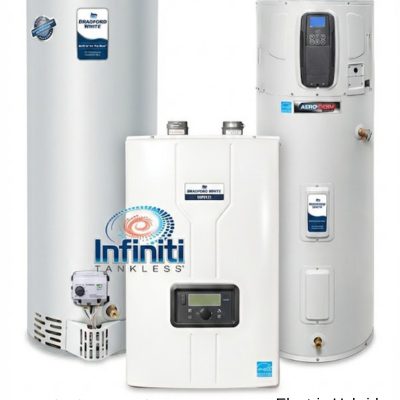
Tankless water heaters are popular because they save space, provide continuous hot water, and can be more efficient than a traditional tank water heater.
But tankless pricing can vary a lot from home to home. The cost is not just the unit itself. The final price depends on gas line sizing, venting, location, condensate drainage, code upgrades, recirculation needs, and how much work is required to install the system properly.
If you are comparing tankless water heater estimates, here are the biggest things that affect the price.
The size of the tankless water heater
Tankless water heaters are sized based on hot water demand, not just the number of people in the home.
The right unit depends on how many bathrooms you have, how many fixtures may run at the same time, the incoming water temperature, and how much hot water your household uses.
A larger unit usually costs more, but undersizing the system can lead to poor performance. The goal is to choose a unit that matches the home without overspending on unnecessary capacity.
Gas line requirements
Gas line sizing is one of the biggest factors in tankless installation pricing.
A standard gas tank water heater often uses far less gas than a whole-home tankless water heater. Many tankless units are 150,000 to 199,000 BTU/hr, which means the existing gas line may not be large enough.
In many homes, the installer needs to run a new dedicated gas line from the meter to the tankless unit. This may be 3/4 inch or larger depending on the distance, BTU load, meter capacity, and other gas appliances in the home.
A lower estimate may not include proper gas sizing. That can lead to performance problems, error codes, or an installation that does not meet code.
Venting requirements
Tankless water heaters have specific venting requirements, and the venting setup can significantly affect the installation cost.
Many modern tankless units use a direct-vent setup, meaning the unit brings combustion air from outside and also exhausts to the outside. This usually requires proper intake and exhaust piping.
Venting through the garage or relying on indoor air is not always acceptable and may not meet manufacturer requirements. Proper venting is critical for safety, performance, and warranty protection.
The cost depends on where the tankless unit is installed, how far the venting has to run, what wall or roof penetrations are needed, and whether the existing venting can be reused. In many cases, it cannot.
Installation location
Where the tankless water heater is installed matters.
Installing the new unit close to the existing water heater location may reduce plumbing, venting, gas, and electrical work. Moving the unit to a new wall, exterior location, attic, crawlspace, or different part of the garage can increase cost.
A good location should allow proper venting, service access, gas line routing, water line connections, condensate drainage, and future maintenance.
The cheapest location is not always the best location. The unit still needs to be accessible and installed according to manufacturer requirements.
Condensate drainage and neutralizer kit
High-efficiency gas tankless water heaters produce condensate. This condensate is acidic and needs to be drained properly.
In many installations, a condensate neutralizer kit should be installed. The neutralizer contains media that helps reduce the acidity before the condensate drains into the plumbing system or approved drain location.
Skipping the neutralizer or draining acidic condensate to the wrong place can damage pipes, concrete, or nearby surfaces over time.
This is one of those details that may not be obvious in a low estimate, but it matters for a correct installation.
Electrical requirements
Gas tankless water heaters still need electricity.
The unit needs power for the control board, ignition system, fan, and safety controls. In some homes, this may be simple. In others, a new outlet, dedicated circuit, or electrical correction may be needed.
If the tankless system includes recirculation controls, smart features, or additional components, the electrical setup may also need to be reviewed.
Recirculation and hot water wait time
Tankless water heaters do not automatically make hot water arrive instantly at every faucet.
If the far bathroom is a long distance from the water heater, there may still be a wait for hot water unless the home has a dedicated recirculation line or another recirculation solution.
Some tankless units have built-in recirculation pumps, but the plumbing layout still matters. Homes without a dedicated return line may need a crossover-style solution, and even then, the result may be faster hot water, not truly instant hot water.
Recirculation options can affect the total installation cost, so they should be discussed upfront.
Code upgrades and safety items
A proper tankless installation may require more than simply hanging the unit on the wall.
The estimate should account for items like gas shut-off valves, sediment traps, water isolation valves, flush service valves, proper vent terminations, condensate handling, pressure relief piping, seismic considerations, electrical requirements, and manufacturer clearances.
These details are important for safety, maintenance, warranty protection, and long-term reliability.
Brand and model selection
The brand and model also affect price.
At Water Heater Boys, Navien is our preferred brand for tankless water heaters. Navien units are popular because they are efficient, reliable, and offer strong options for residential tankless systems, including models with built-in recirculation features.
The best model depends on the home’s layout, hot water demand, gas availability, and whether recirculation is needed.
Why some tankless estimates are much lower
If one estimate is much lower than the others, it is worth asking what is included and what is being left out.
A low tankless estimate may skip or underprice important items such as a dedicated gas line, proper intake and exhaust venting, condensate neutralizer, isolation valves, service valves, electrical work, recirculation planning, permits, or code corrections.
That does not mean the highest estimate is always the best. But with tankless water heaters, a very low price can sometimes mean the installer is planning a shortcut that may cost more later.
What to look for in a tankless water heater estimate
A good estimate should clearly explain what unit is being installed, whether a new gas line is needed, how the unit will be vented, where the condensate will drain, whether a neutralizer is included, what electrical work is required, whether recirculation is included, and what code upgrades are part of the job.
It should also explain what is not included, such as permit fees, major electrical panel work, drywall repair, or unexpected conditions hidden inside walls or ceilings.
Clear pricing upfront helps avoid surprises later.
Is tankless worth it?
Tankless water heaters can be a great choice for the right home.
They save space, provide continuous hot water, and can be efficient when installed correctly. They can also be a good option for homeowners who want to avoid storing 40 to 75 gallons of hot water in a tank.
But tankless is not the best fit for every home. Installation cost, gas line requirements, venting, maintenance, recirculation needs, and future Bay Area gas appliance rules should all be considered before making the switch.
Bay Area tankless water heater rules
Another factor to consider is the Bay Area gas appliance phase-out.
Under the current Bay Area timeline, many high-BTU gas tankless water heaters are expected to be affected in 2031. This is different from standard residential gas tank water heaters under 75,000 BTU/hr, which are currently tied to the earlier 2027 deadline.
That means a tankless water heater may still be an option today, but homeowners should understand the long-term timeline before investing in a new gas system. If you plan to stay in the home long term, it is worth comparing tankless against hybrid heat pump water heater options before making a final decision.
Water Heater Boys can help
Water Heater Boys installs tankless water heaters throughout the Bay Area.
We offer free site visits and can usually inspect your setup quickly. During the visit, we look at your current water heater, gas line, venting options, installation location, drainage, electrical access, and hot water needs.
From there, we can provide a clear estimate and explain whether tankless makes sense for your home, or whether a gas tank, electric, or hybrid heat pump water heater may be a better option.
Call Water Heater Boys at (925) 208-4626 to schedule a tankless water heater estimate.